
Asphalt Thickness Calculator:
The “Structural Number” Guide (2026)
Thickness is not a suggestion; it’s physics. Learn why “2 inches” is a recipe for failure and how to calculate the correct depth for RVs, trucks, and cars.
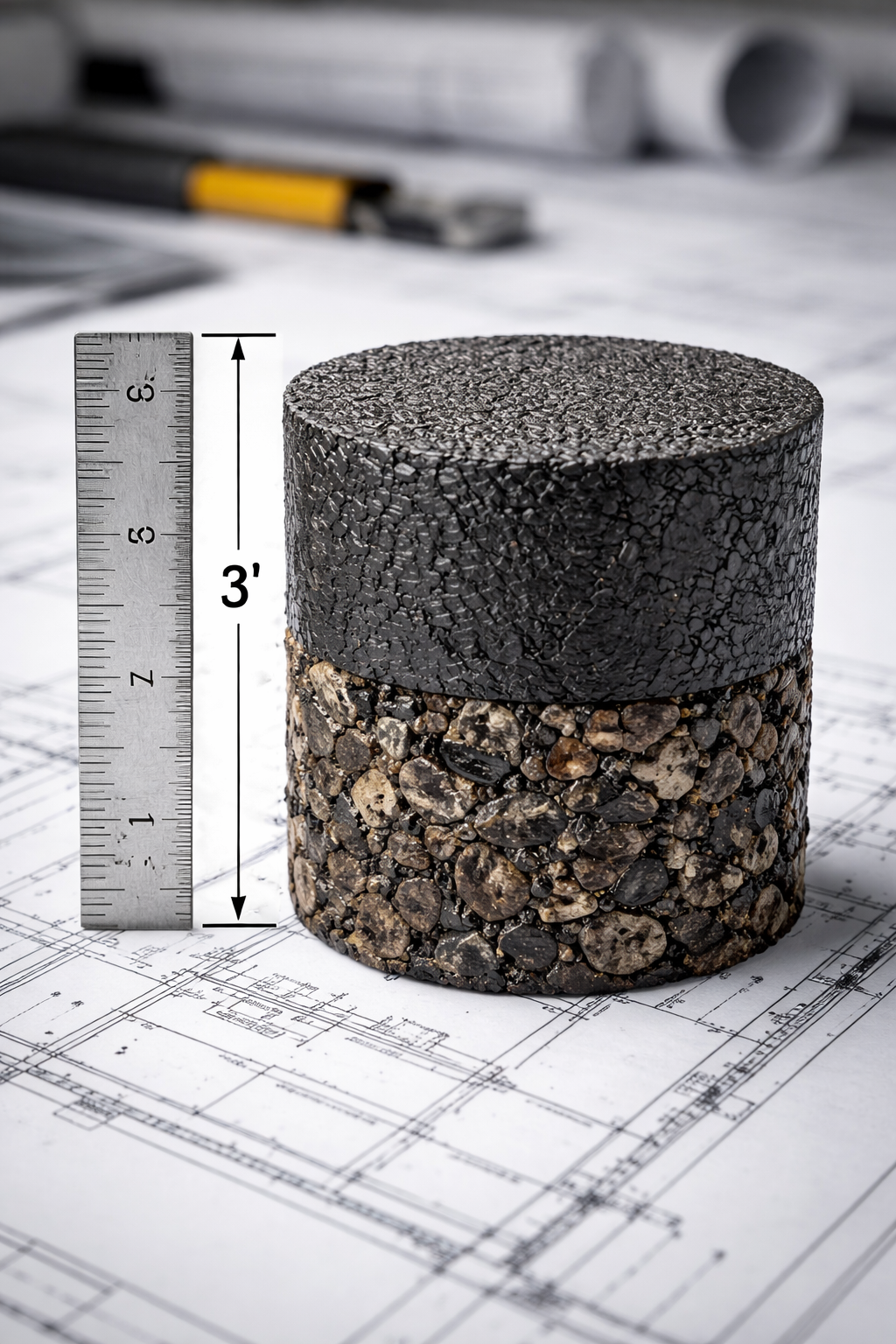
In my 20 years of civil engineering, I have seen hundreds of driveways fail within 24 months. The cause is almost always the same: Insufficient Structural Thickness.
Homeowners often ask: “Can’t we just do 2 inches to save money?”
My answer is always: “Sure, if you want to pave it again in 3 years.”
Asphalt is a flexible pavement. It relies on thickness to distribute the point-load of a tire into the sub-grade below. If the asphalt is too thin, it flexes too much, cracks appear, water enters, and the system fails. This guide defines the 2026 Minimum Compacted Standards for every application.
The 2026 Thickness Standards
These are Compacted Depths (after rolling). Never let a contractor sell you “Loose Depth” numbers.
| Application | Min. Compacted Depth | Layer Structure | Expected Load |
|---|---|---|---|
| Standard Residential | 3.0 Inches | Single Lift or 1.5″ Binder + 1.5″ Top |
Sedans, SUVs, Light Pickups. |
| Heavy Duty Residential | 4.0 – 5.0 Inches | Must be 2 Lifts: 3″ Binder + 2″ Top |
RVs, Boats, Propane Trucks, Amazon Vans. |
| Resurface (Overlay) | 1.5 – 2.0 Inches | Single Surface Lift | Condition: Only if base is solid. |
| Commercial / Farm | 6.0+ Inches | Multiple Base Lifts | Tractor Trailers, Dump Trucks. |
Why We Pave in “Lifts” (Layers)
You might ask: “If I need 4 inches, why not pour it all at once?”
This is a critical engineering mistake.
The Compaction Problem
If you lay 4 inches of hot asphalt at once, the roller will compact the top crust, but the middle will remain soft (like a jelly donut). This creates “unconsolidated” pockets that will rut immediately under a heavy truck.
The Multi-Lift Solution
We install a Binder Course (large stone) first and compact it. Then, we install a Surface Course (fine stone) on top. This ensures 100% density throughout the entire structure.
💰 The “Penny Wise, Pound Foolish” Calculation
Let’s look at the math for a 1,000 sq. ft. driveway using 2026 prices. Is saving 1 inch worth it?
Option A: 2 Inches (Cheap)
- • Material Cost: ~$1,500
- • Lifespan: 7-10 Years
- • Risk: High (Cracks in winter)
- Cost Per Year: $150/year
Option B: 3 Inches (Standard)
- • Material Cost: ~$2,200
- • Lifespan: 20+ Years
- • Risk: Low (Structural Stability)
- Cost Per Year: $110/year
Engineer’s FAQ
Does the base layer count towards thickness? ▼
How much does asphalt compact? ▼
📚 Related Engineering Guides
Check Your Thickness Specs
Don’t accept a bid without verifying the math. Use our calculator to determine exactly how many tons are required for 3″, 4″, or 6″ depth.
OPEN THICKNESS CALCULATOR