
Asphalt Tonnage Calculator Formula:
How to Measure & Order (2026 Guide)
Don’t order short. Learn the “148 Density Rule,” calculate specific gravity, and understand the crucial difference between Loose vs. Compacted thickness.
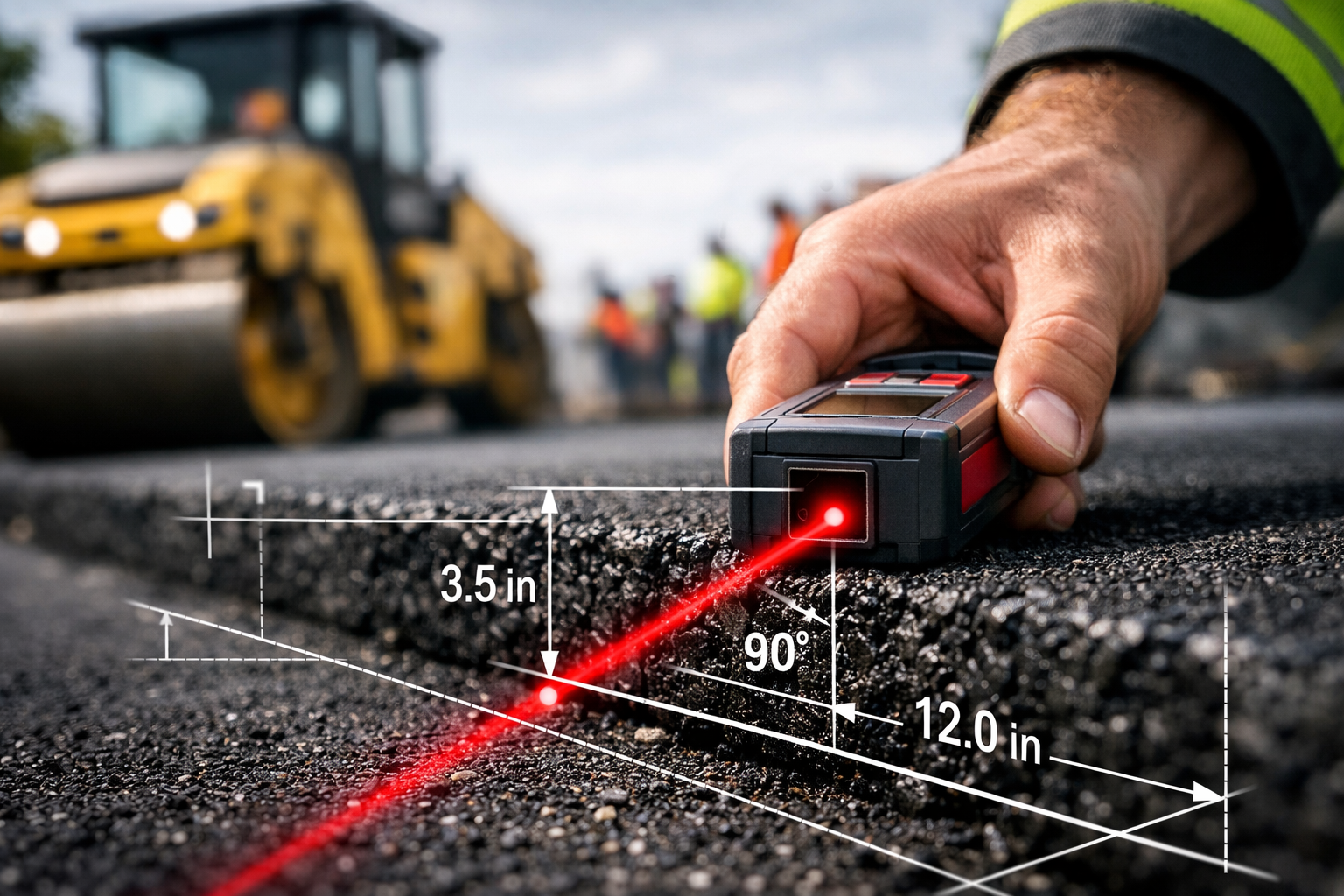
There is no worse feeling in the paving industry than seeing the paver hopper run empty with 10 feet of driveway left to go. This error forces a “cold joint”—an ugly seam where the new asphalt meets the old, cooled asphalt. It is a structural weak point and a cosmetic disaster.
On the flip side, ordering too much hot mix is expensive. With 2026 asphalt prices averaging $100+ per ton, sending 3 tons back to the plant is throwing $300-$500 directly in the trash.
Whether you are calculating for Hot Mix Asphalt or Recycled Millings, the physics are the same. This guide breaks down the math so you can order with confidence.
The Golden Formula
Professional estimators use a standard density constant based on the specific gravity of the stone. For most standard surface mixes (like #9 or #7 stone), the magic number is 148 lbs per cubic foot.
- L: Length in feet.
- W: Width in feet.
- D: Thickness in inches (Divide by 12 to convert to feet).
- 148: Density (lbs per cubic foot).
- 2000: Conversion from lbs to Tons.
⚠️ The “Fluff Factor”: Loose vs. Compacted
Crucial Engineering Concept:
Asphalt contains air voids when it comes out of the truck. It “fluffs” up. When you run a 3-ton roller over it, it compresses by approximately 20-25%.
❌ The Amateur Mistake
You order enough for 3 inches. The crew lays it 3 inches thick.
(Too thin = Cracking in 2 years)
✅ The Pro Calculation
You calculate for 3 inches COMPACTED. You lay it 4 inches thick.
(Perfect Structural Integrity)
The “Waste Factor” Rules
Never order the exact mathematical amount. Real-world conditions require safety margins.
- 5% Waste Straight Driveways: For simple rectangles with straight edges.
- 10% Waste Curved / Radius: Curves require hand-work and cutting, which creates scrap.
- 15% Waste Cul-de-sacs & Berms: Highly complex shapes or when adding asphalt curbing.
Recommended Thickness by Usage
| Application | Compacted Depth | Tonnage per 1,000 Sq. Ft. |
|---|---|---|
| Resurface / Overlay | 1.5 – 2.0 Inches | 9 – 12 Tons |
| New Residential Driveway | 3.0 Inches | 18 – 19 Tons |
| Heavy Duty (RV/Trucks) | 4.0 – 5.0 Inches | 25 – 31 Tons |
| Commercial Parking Lot | 4.0 – 6.0 Inches | 35+ Tons |
Frequently Asked Questions
🚛 How much asphalt does a dump truck hold?
It depends on the truck size. Knowing this helps you plan deliveries:
• Single Axle (Small): 5 – 8 Tons (Good for patch work).
• Tri-Axle (Standard): 18 – 22 Tons (Most common for driveways).
• Quad/Quint (Super): 22 – 25 Tons (Used for parking lots/highways).
📏 What is the “110 Rule” in paving?
The “110 Rule” is a quick mental math shortcut used by contractors. It states that you need 110 lbs of asphalt per square yard per inch of thickness. It is slightly less accurate than the 148 density formula but works well for rough estimates.
❓ Can I calculate tonnage for Gravel using this?
No! Gravel has a different density because it has more air gaps. Gravel typically weighs 105-115 lbs/ft³, whereas asphalt is 145-150 lbs/ft³. Using the asphalt calculator for gravel will make you over-order by ~20%. Use our specialized Gravel Calculator Guide instead.
Engineered for You
Calculate Instant Tonnage
Stop doing mental math. Enter your length and width, select your thickness, and get the exact load size immediately.
OPEN ASPHALT CALCULATOR