
Recycled Asphalt Millings:
The 2026 Homeowner’s Guide
Get the look of a blacktop driveway for half the price. Learn how to harden millings using “Diesel Heat” or compression.
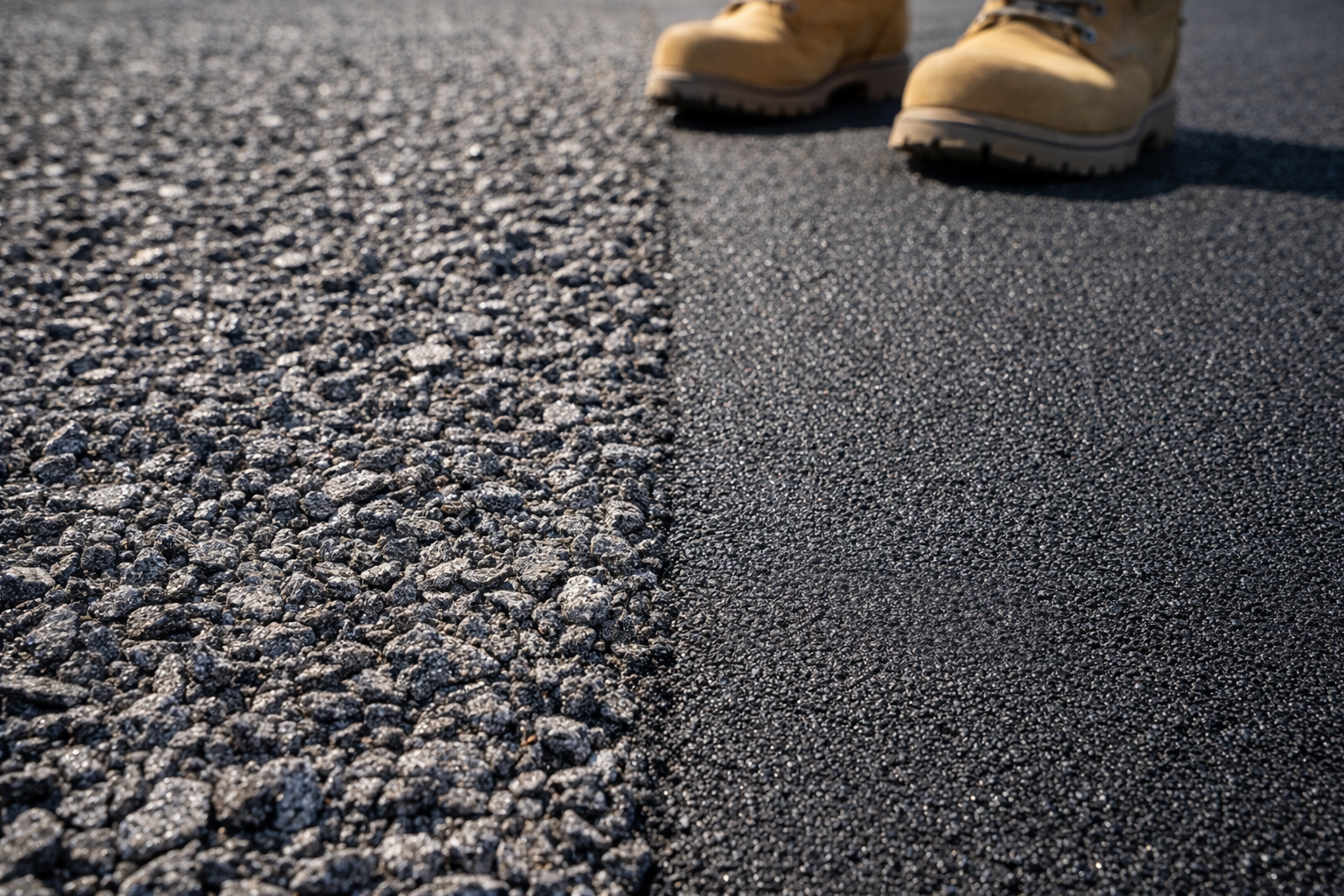
Want a paved driveway but scared of the high cost of fresh Hot Mix Asphalt? You are not alone. In 2026, material prices are skyrocketing.
Enter Recycled Asphalt Millings (also known as RAP). It’s basically old roads crushed into gravel-sized chunks. It installs exactly like a standard gravel driveway, but with one magic trick: over time, the sun’s heat melts the old tar, rebinding it into a semi-solid surface.
$ The Price Showdown (Per Ton)
Prices vary by local availability (proximity to asphalt plants), but here is the 2026 national average:
Is it Right for You?
The Advantages
- ✅ Hardens Over Time: Unlike gravel, millings bond together under heat.
- ✅ No Dust: Doesn’t kick up dust clouds like limestone.
- ✅ Eco-Friendly: Keeps tons of waste out of landfills.
- ✅ Snow Melt: The black color attracts sun, melting snow faster than concrete.
The Downsides
- ❌ Not a Smooth Surface: It will never be as smooth as fresh asphalt.
- ❌ Tracking: Can track loose tar chips into the house on hot days.
- ❌ Not for Patios: It is too uneven. For patios, always use a proper paver base.
👷♂️ Engineer’s Secret: The “Rejuvenator” Trick
Millings are “old” asphalt, meaning the oil has dried up. To make them rock-hard:
- Spread the millings to a depth of 4-6 inches (compacts to 3″).
- Spray a coat of Diesel Fuel or special Asphalt Rejuvenator (check local laws).
- Compact immediately with a 2-ton vibratory roller on a hot day.
- The chemical reaction reactivates the old bitumen, bonding the stone.
Calculate Your Millings Tonnage
Millings are sold by the ton. Use our calculator (select “Gravel” or “Asphalt” mode) to get the exact load size.
Calculate Tonnage Now