
Driveway Paving Permit Cost:
Do You Need a Permit to Pave?
Before the first load of asphalt or gravel arrives, you must clear local zoning laws. A paving engineer breaks down permit costs, drainage plans, and Right-of-Way rules.
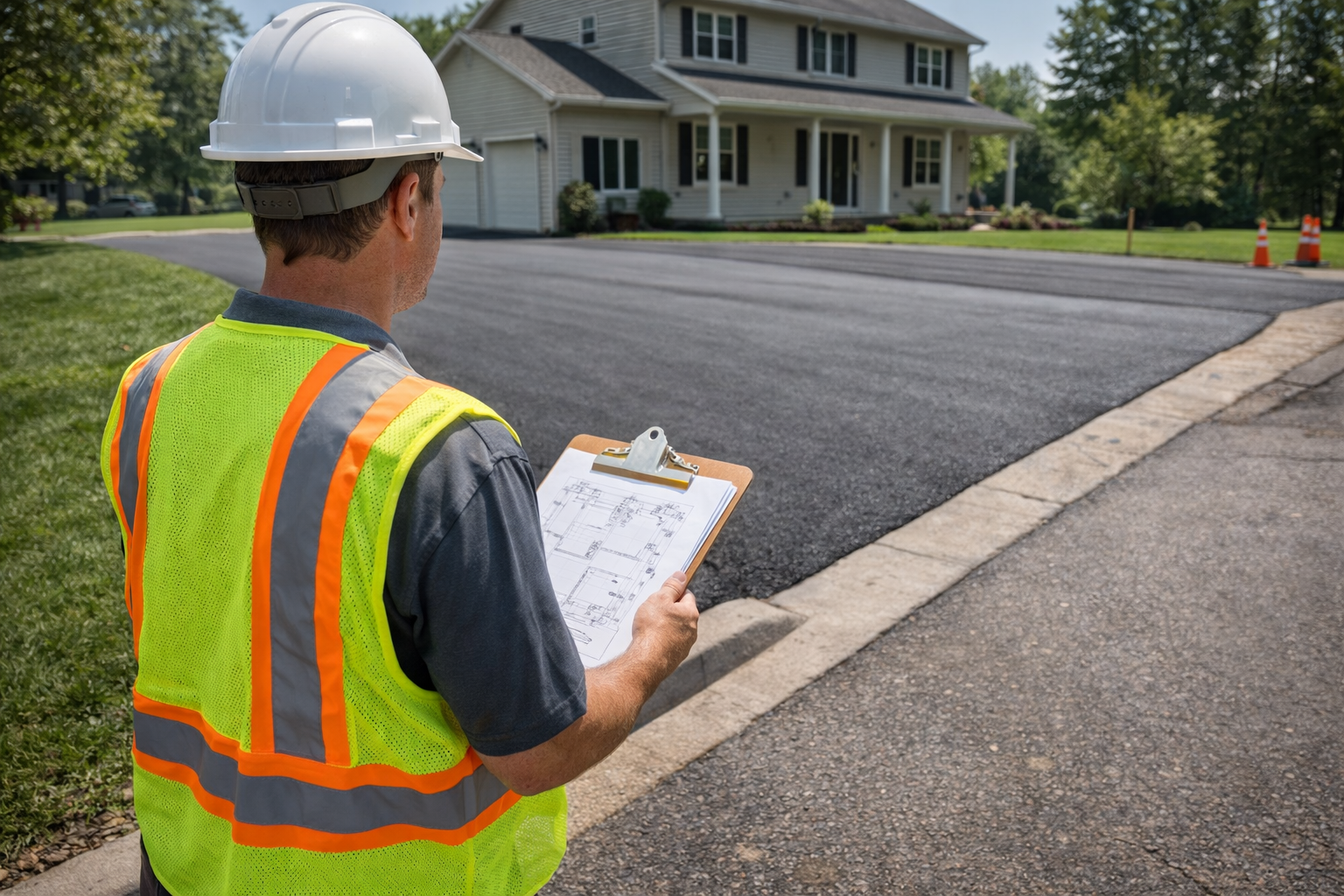
“Do I really need a permit just to pave my own driveway?” As a paving engineer, this is one of the most common questions I hear. The short answer is: Almost certainly, yes.
Before installing a new surface or expanding an existing driveway, municipalities require a construction or zoning permit. Local governments do not care about your driveway’s aesthetics; they care about drainage impact, impervious cover limits, Right-of-Way (ROW) access, and utility setbacks.
While the driveway paving permit cost is usually a tiny fraction of your total project budget, skipping this legal step can result in heavy fines or a municipal order to demolish the new pavement at your expense. For a complete understanding of how permits fit into the broader construction process, review The Master Paving Guide and see our breakdown of How Much Does Paving a Driveway Cost.
Average Driveway Permit Cost
Permit fees vary dramatically depending on whether you live in an unincorporated county or a strict city limit. Below are the standard municipal fees you can expect in 2026:
| Permit Type | Typical Cost Range |
|---|---|
| Residential Driveway Zoning Permit | $50 – $200 |
| Street Curb Cut (Right-of-Way) Permit | $100 – $500 |
| Municipal Inspection Fees | $50 – $150 |
Engineer’s Note: A “Curb Cut” or “Apron” permit is the most expensive. This applies to the first 10-15 feet of your driveway that meets the public road. Because the city technically owns this land, they strictly enforce how it is paved to prevent damage to public snowplows and stormwater drains.
When a Driveway Permit Is Required
Most municipalities mandate a permit application for the following scenarios:
Permit Requirements for Asphalt
When applying for an asphalt permit, the city engineer’s office will look for three main things: Drainage plans (water cannot run off your pavement into your neighbor’s yard), slope verification (minimum 2% grade toward the street), and setback compliance (minimum distance from property lines).
For technical construction specifications often requested by building departments, review the Residential Asphalt Paving Guide and our Asphalt Thickness Calculator Guide.
Permit Requirements for Gravel Driveways
Homeowners often assume that because gravel is “loose rock,” they don’t need a permit. While rural areas generally have simpler rules, many counties require an Erosion Control Plan. Because gravel is porous, it can wash out into public storm drains during heavy rain.
You may be required to install a specific size of crushed stone or culvert pipes. Learn more about compliant aggregates in Gravel Driveway Cost Types and review proper containment methods in our DIY Gravel Installation Guide.
Permit Requirements by State
Local geography dictates local laws. Here is how permit priorities shift across the country:
Texas (Impervious Cover)
Cities like Austin strictly limit how much of your lot can be paved to prevent flooding. See Texas Asphalt Pricing & Rules.
Florida (Coastal Drainage)
High water tables mean strict stormwater runoff permits and HOA approvals. See Florida Paving Guidelines.
California (Environmental)
High permit costs due to CEQA (environmental impact) and urban heat island regulations. See California Pricing.
Ohio (Snowplow ROW)
Permits focus heavily on the driveway apron to ensure it doesn’t damage municipal snowplows. See Ohio Gravel Guide.
Case Study: Driveway Permit Approval
Inspection Requirements:
- Pre-pour inspection of the aggregate base preparation.
- Verification of a 2% minimum drainage slope toward the street.
- Confirmation that expansion did not cross property setbacks.
How Permits Affect Total Cost
Do not let permit fears delay your project. On a standard $6,000 driveway replacement, a $150 permit fee represents just 1% to 3% of the total project cost.
Reputable paving contractors will handle the permit pulling process for you, absorbing the administrative time into their overhead. Understand total cost structures here: Total Driveway Cost Guide.
When Removal Requires a Permit
If you are tearing out an old driveway, the demolition itself may require a permit, especially if heavy machinery will block the public street or if the removal disrupts the city curb and sidewalk.
Discover the true costs of demolition in our Asphalt Removal Cost Per Square Foot guide.