
Cost to Expand a Driveway:
(Asphalt, Concrete, or Gravel)
Adding space for a second vehicle or an RV? A paving engineer breaks down the true cost to widen your driveway and the hidden geotechnical challenges.
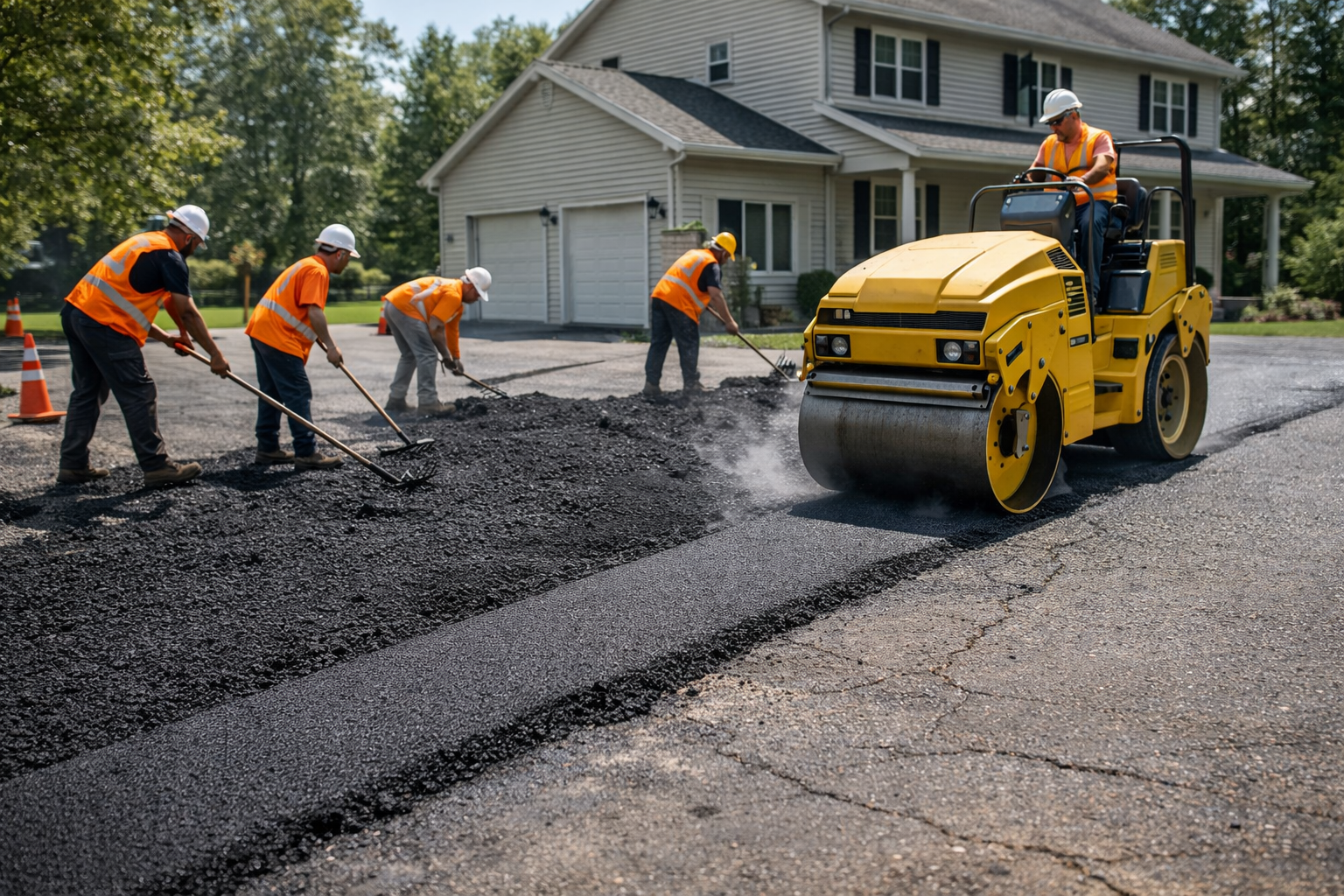
Driveway expansion projects are incredibly common. Homeowners frequently need to add a second vehicle, extend their garages, or create dedicated parking space for an RV or boat.
However, from a paving engineer’s perspective, widening a driveway is not as simple as pouring new material next to the old. The actual cost to expand a driveway depends heavily on the driveway material, base preparation requirements, drainage design, and mandatory excavation depth.
Before requesting bids, you must understand the foundational principles of pavement design. I strongly recommend reviewing our breakdown of How Much Does Paving a Driveway Cost and exploring The Master Paving Guide for general construction knowledge.
Average Cost to Expand a Driveway
The cost to widen your driveway is primarily dictated by the surface material you choose. Below is the 2026 engineered pricing baseline.
| Material | Cost per Sq. Ft. |
|---|---|
| Gravel (Crushed Stone) | $2.00 – $6.00 |
| Hot Mix Asphalt | $5.00 – $12.00 |
| Poured Concrete | $8.00 – $18.00 |
Expansion Estimate Example:
If you need to add a 10′ x 30′ parking pad (300 sq. ft.) alongside your existing driveway, the typical cost range will be $1,500 to $5,400, depending on the material selected and the required excavation depth. For a deep dive into material differences, read our Asphalt vs Concrete Driveway Cost Comparison.
Cost to Expand an Asphalt Driveway
Expanding an asphalt driveway requires a strict engineering process to prevent a “cold joint” failure where the old and new asphalt meet. The process includes:
- Excavation: Digging down past the topsoil to stable dirt.
- Base Preparation: Installing and compacting a new aggregate stone base to match the existing driveway’s depth.
- Asphalt Paving: Laying the hot mix flush with the existing surface.
- Compaction: Using a vibratory roller to fuse the “seam” together.
Local labor rates and environmental regulations heavily influence this cost. See our regional pricing guides for Texas, Florida, and California.
Cost to Expand a Gravel Driveway
Gravel offers distinct advantages for expansion projects: it requires the easiest installation, boasts a low material cost, and provides a highly flexible design that easily blends with the existing surface.
To properly engineer a gravel extension, review the Gravel Driveway Cost Types and see how freeze-thaw climates impact base depth in our Ohio Gravel Guide. If you are taking on the project yourself, follow our step-by-step DIY Installation Guide.
Engineering Challenges When Expanding a Driveway
A poorly executed expansion will look terrible and fail quickly. Contractors must mitigate these technical problems:
Base Mismatch
If the new aggregate base is shallower than the old one, the new section will sink under vehicle weight.
Drainage Slope
The expanded area must maintain a minimum 2% cross-slope so water doesn’t pool on the seam.
Edge Cracking
Without proper edge compaction on the new outer boundary, the asphalt will crumble over time.
Differential Settlement
New soil settles differently than dirt that has been packed down for 20 years.
Review the Residential Asphalt Paving Guide and the Asphalt Thickness Calculator Guide to understand proper structural mitigation.
Case Study: Asphalt Driveway Expansion
Process:
- Excavate 8 inches of topsoil and clay.
- Install and compact new aggregate base.
- Pave 3 inches of compacted asphalt to match the old driveway.
Material Calculation for Driveway Expansion
If you are budgeting for an expansion, estimating materials requires three exact metrics: area calculation (length × width), desired compacted thickness, and asphalt density (approx. 145 lbs/ft³).
Do not guess your tonnage. Follow the math in the Asphalt Tonnage Calculator Formula Guide or use our step-by-step walkthrough: How Do I Calculate How Much Asphalt I Need.
When Repaving Is Better Than Expansion
Sometimes, widening a driveway exposes severe structural problems in the old pavement. If your original driveway is heavily oxidized, severely cracked, or nearing the end of its 20-year lifespan, adding a new pristine section next to it will highlight how bad the old section looks.
In these cases, completing the expansion and then repaving the entire driveway (overlay) is a better long-term aesthetic and structural solution. See the Cost to Repave an Existing Asphalt Driveway.
Before repaving an existing asphalt driveway, it is important to verify whether a local construction permit is required. In many municipalities, resurfacing or structural repairs that modify driveway width, drainage flow, or curb access must be approved by the city or county engineering department. Permit fees are usually small compared to the overall paving cost, but failing to obtain one can lead to project delays or municipal fines. If you are not sure whether your repaving project requires approval, review our detailed guide on driveway paving permit costs and requirements to understand when permits are required before resurfacing or reconstructing an asphalt driveway.
When Asphalt Removal Is Required
If portions of your old pavement or existing concrete walkways interfere with the new expansion footprint, heavy demolition is required. Ensure you budget for the machinery and disposal fees associated with this step. Learn more about the demolition phase in our guide on Asphalt Removal Cost Per Square Foot.
Maintenance After Driveway Expansion
The most vulnerable part of an expanded driveway is the “seam” where the new material meets the old. Water intrusion here will cause the joint to split during freeze-thaw cycles.
Applying a commercial-grade sealcoat over the entire driveway (both old and new sections) will protect the joint and unify the color. Read our analysis on Asphalt Sealcoating Cost: Spray vs Squeegee.
Calculate Your Expansion Tonnage
Stop guessing material costs. Input your planned expansion dimensions into our calculator to get exact tonnage and pricing estimates.
START CALCULATOR