
Asphalt Removal Cost Per Square Foot:
Contractor Pricing Guide
Before installing a new surface, the old one must go. Learn the true engineering costs of asphalt demolition, milling, and full excavation.
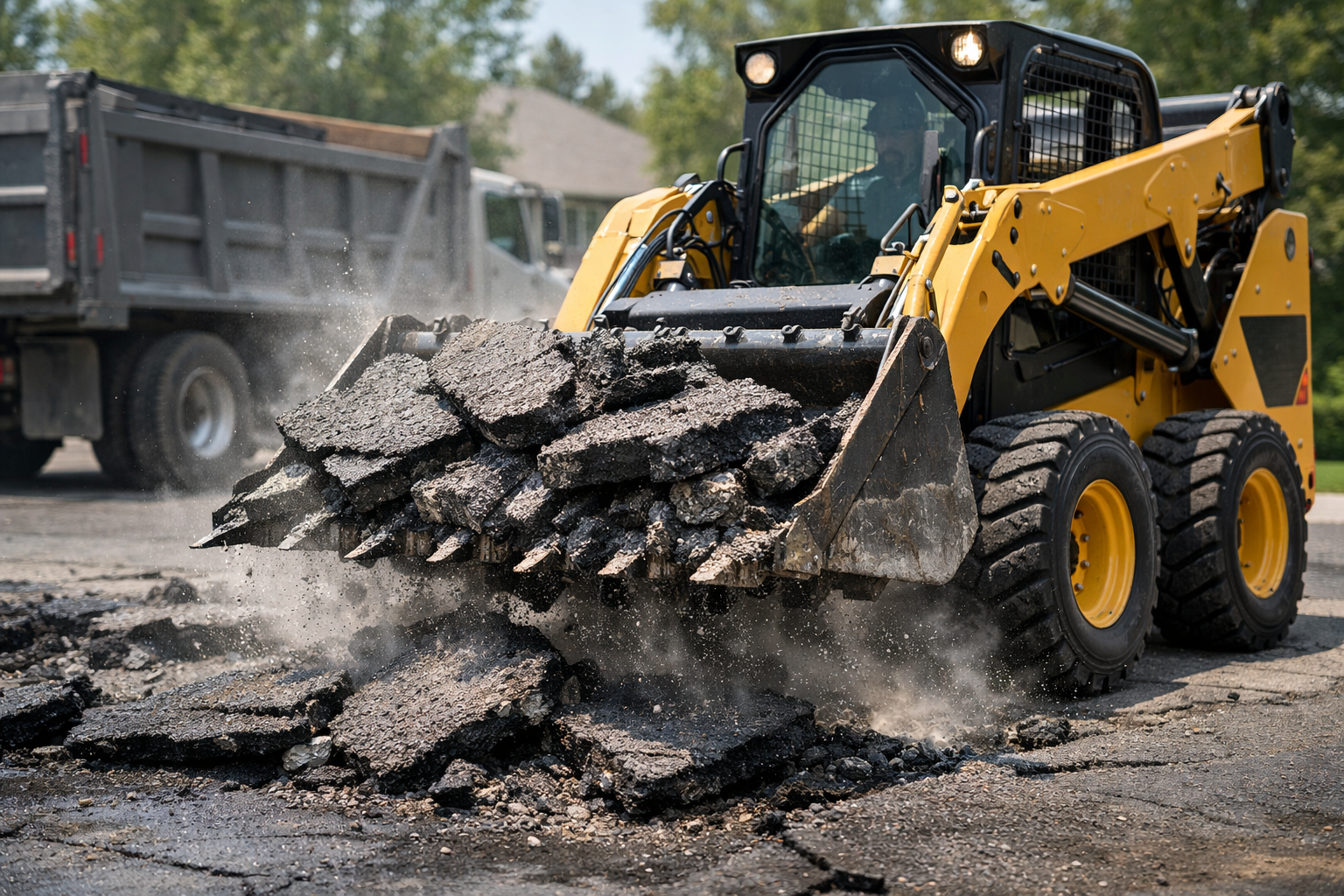
Before a paving crew can lay a flawless new surface, they must often execute a complete or partial demolition of the existing pavement.
As an estimating engineer, I see homeowners frequently overlook the asphalt driveway removal cost when budgeting for a replacement. Pavement removal is heavy, equipment-intensive work. The final cost to remove an asphalt driveway depends heavily on the existing pavement thickness, subgrade base condition, site accessibility, and local landfill disposal fees.
Removal is the unavoidable first step before major resurfacing or full reconstruction. To understand where demolition fits into the broader paving process, review the Residential Asphalt Paving Guide, or check our comprehensive overview on How Much Does Paving a Driveway Cost.
Average Asphalt Removal Cost
The asphalt demolition cost varies based on the machinery required and the depth of the extraction. Here are the 2026 contractor baseline rates:
| Removal Method | Cost per Sq. Ft. |
|---|---|
| Saw Cut and Haul (Patching) | $2.00 – $4.00 |
| Milling Removal (Top Layer) | $1.50 – $3.00 |
| Full Excavation (Down to Dirt) | $3.00 – $6.00 |
Typical Driveway Example:
For a standard 800 sq. ft. driveway requiring full excavation, the estimated removal cost ranges from $1,600 to $4,800.
Equipment Factor: This pricing accounts for the mobilization of heavy machinery. Contractors will utilize a skid steer for lifting, an asphalt breaker (hydraulic hammer) for thick slabs, and a milling machine for precision depth removal.
When Asphalt Removal Is Necessary
From an engineering standpoint, you cannot simply pave over a structurally compromised foundation. Full removal is strictly required under the following conditions:
- ✘ Structural Base Failure: The aggregate beneath the asphalt has washed away or collapsed.
- ✘ Severe Rutting: Permanent tire depressions indicating an inability to bear load.
- ✘ Deep Cracking: “Alligator cracking” that penetrates the entire depth of the pavement.
- ✘ Drainage Collapse: Pavement must be removed to re-grade the slope away from the house.
Unsure if your driveway needs removal or just a topcoat? Read our decision guide: Cost to Repave an Existing Asphalt Driveway.
Asphalt Milling vs Full Removal
| Method | Primary Use Case | Impact on Base |
|---|---|---|
| Milling | Surface replacement / Profile correction | Leaves aggregate base intact |
| Full Removal | Structural failure / Base replacement | Exposes subgrade dirt |
Milling grinds away only a specific thickness of the old surface. To understand how milling depth affects your new material requirements, refer to the Asphalt Thickness Calculator Guide and the Asphalt Tonnage Calculator Formula Guide.
What Affects Asphalt Removal Cost?
1. Pavement Thickness
Demolishing a 2-inch residential driveway is entirely different from breaking up a 5-inch heavy-duty pavement. Thicker asphalt requires heavier hydraulic breakers, more labor hours, and results in higher tonnage to haul away. Learn how thickness dictates tonnage here.
2. Accessibility
If a tri-axle dump truck and a large skid steer can easily back into your driveway, demolition is fast. Driveways with limited access, narrow gates, or low-hanging tree canopies force crews to use smaller equipment, drastically increasing labor time and cost.
3. Asphalt Disposal Costs
Landfill “tipping fees” are charged by the ton. Fortunately, asphalt is 100% recyclable. Many contractors haul demolished pavement to recycling plants where it is crushed into Reclaimed Asphalt Pavement (RAP). This recycling possibility can lower your disposal fees. Learn more in our Recycled Asphalt Millings Cost Guide.
Case Study: Residential Asphalt Removal
Project Scope:
- Saw cutting edges near the garage foundation.
- Skid steer demolition of the pavement layer.
- Haul away and disposal of all asphalt debris.
Engineer’s Conclusion: The removal was executed cleanly. The underlying aggregate base layer remained highly usable, allowing the homeowner to opt for standard repaving instead of a much costlier full reconstruction. (See Repaving Costs).
How Removal Cost Impacts Total Driveway Replacement
When reviewing a paving bid, be aware that removal and disposal can represent 20% to 40% of the total project cost. Because tipping fees and labor rates vary significantly by geography, demolition costs swing widely across the country.
Check how removal impacts the total installed price in these high-demand regions:
- 🇺🇸 Asphalt Pricing in Texas (Heavy clay subgrades)
- 🌴 Asphalt Pricing in Florida (High water tables)
- 🌉 Asphalt Pricing in California (Strict environmental disposal fees)
Alternative Option: Overlay Instead of Removal
If your driveway surface looks terrible but the foundation beneath it is solid (no deep ruts, no structural shifting), you might be able to skip the demolition phase entirely. An asphalt overlay (resurfacing) allows contractors to pave a new layer directly on top of the old one, saving you thousands in removal fees. Explore the Overlay Option Here.
Related Material Costs
Maintenance After Replacement
Once you have paid to remove the old asphalt and install a fresh driveway, protecting that investment is paramount. Sealcoating prevents water penetration and UV oxidation.
Read the Sealcoating Guide (Spray vs Squeegee) to understand maintenance costs.
Estimate Your New Driveway Materials
Once the demolition is complete, you need to know exactly how much new hot mix to order. Use our engineering tool to calculate the exact tonnage.
OPEN ASPHALT CALCULATOR