
Gravel Driveway Cost in Ohio:
The Field Engineering Guide (2026)
Ohio is not Florida. Learn how clay soils, snowplows, and 50+ annual freeze-thaw cycles dictate true installation costs ($3.00 – $8.00/sq ft).
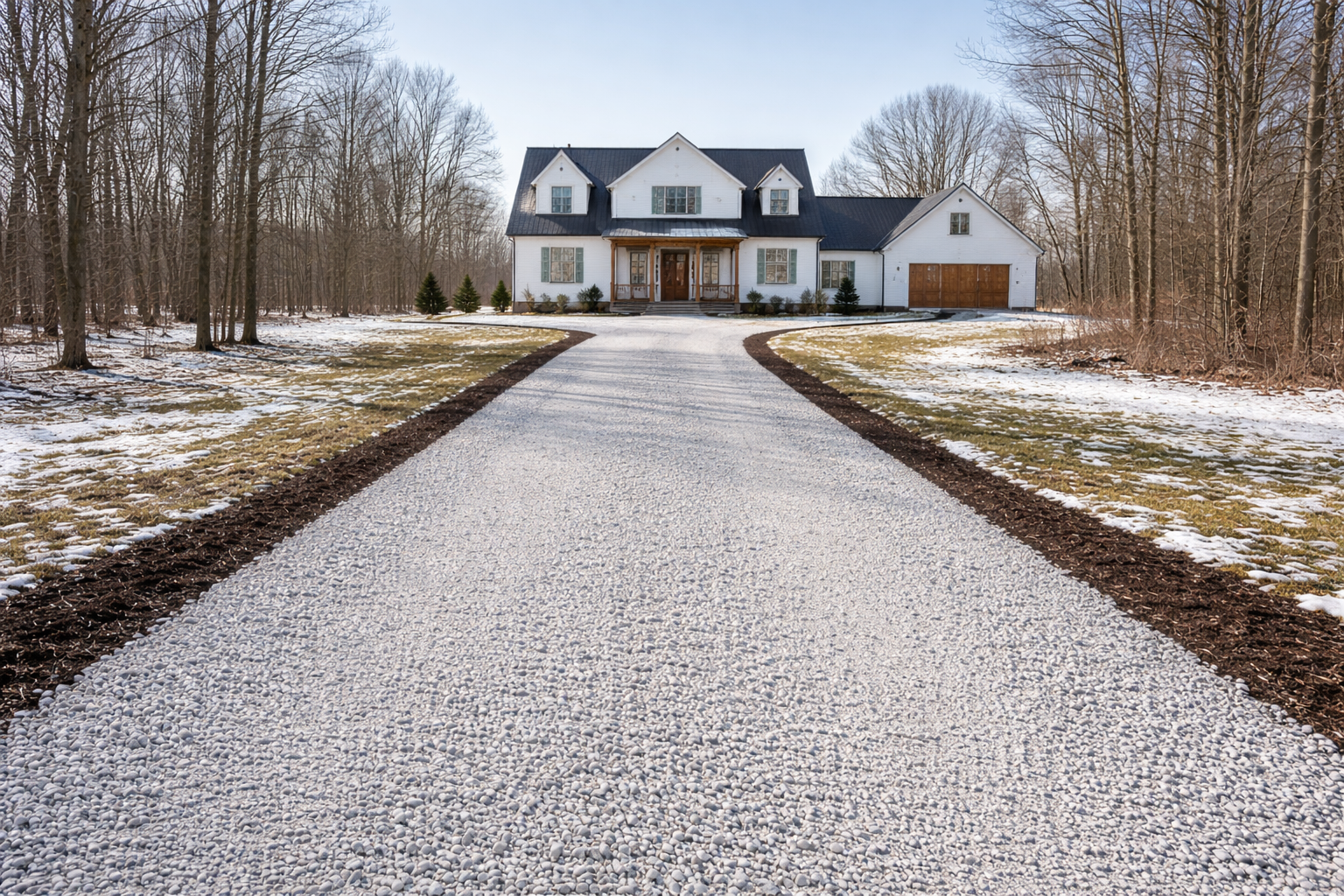
If you are planning a gravel driveway in Ohio, generic national pricing will lead you straight to a muddy disaster. As a paving engineer with years of cold-climate base construction experience in the Midwest, I can tell you: Ohio is a freeze-thaw dominant environment.
Here, we battle clay-heavy soils, brutal snowplow exposure, and deep seasonal saturation. In Ohio, the performance of your driveway depends less on the crushed stone itself and entirely on subgrade preparation, drainage, and base layering strategy.
This guide reflects how gravel driveways are actually engineered and priced in the Buckeye State for 2026.
1. Average Gravel Driveway Cost in Ohio (2026)
Most standard, structurally engineered residential builds in Ohio fall between $3,500 and $6,000. Here is the per-square-foot breakdown:
| Installation Type | Cost per Sq. Ft. | Typical 600–1,000 Sq. Ft. |
|---|---|---|
| Basic Regrade + Top Layer | $1.50 – $2.50 | $900 – $2,500 |
| New Install (Proper Base) | $3.00 – $5.50 | $1,800 – $5,500 |
| Heavy-Duty Rural Build | $5.50 – $8.00 | $3,300 – $8,000 |
⚠️ The Red Flag Warning
Anything quoted below $2 per sq. ft. for a new install in Ohio usually means: No excavation, no geotextile separation, and insufficient base depth. That driveway will fail and sink into the mud within 1–3 winters.
2. Ohio Soil Conditions: The Freeze-Thaw Cycle
Ohio commonly presents a “triple threat” to pavements:
- 1 Clay-based subgrades (retains water).
- 2 Poor natural drainage.
- 3 50+ Freeze-Thaw cycles annually.
The Physics:
Clay retains water. Water freezes and expands (Frost Heave). When it thaws, it leaves a void. Without a structural base design, heavy vehicles will push your expensive gravel down into the soft clay, forming deep ruts. In engineering terms, failure begins at the subgrade–base interface, not the surface.
The “Pumping” Effect
Vehicle weight pushes mud up through the gravel layer during the spring thaw.
3. The Ohio “No-Sink” Structural Section
A structurally sound gravel driveway in the Midwest is built like a road. It requires an 8–12 inch total compacted thickness.
* Engineer’s Note: Skipping the geotextile fabric on Ohio clay soil is the most common and costly mistake I encounter.
4. Material Costs (2026 Ohio Market Data)
Transportation heavily influences aggregate cost, especially in rural Ohio counties. Here is the average bulk aggregate pricing (delivered):
The Real Cost of a 900 Sq. Ft. Driveway:
At a 10-inch compacted depth, you require approximately 28–35 tons of aggregate total.
• Material alone: $1,200 – $2,000.
• Add Equipment (Skid steer, roller), Compaction passes, Labor, and Grading.
• Final Realistic Installed Range: $4,000 – $6,500.
5. Case Study: Northeast Ohio Rural Driveway
Engineering Approach
- Excavation: 12 inches deep.
- Geotextile separation fabric installed.
- 8 inches compacted #57 limestone base.
- 3 inches surface 3/4″ minus stone.
Result after two harsh winters: No rutting, no pumping, fully stable under heavy snowplows. Minimal maintenance required. The key factor was the fabric and adequate base depth.
6. Snowplows and Winter Engineering
Ohio winters create frost heave, meltwater saturation, and aggressive snowplow blade displacement. To combat this, follow these engineering rules:
- Crown the Driveway: Must have a 2–3% crown (higher in the middle) to shed meltwater into side ditches.
- Angular Stone Only: Avoid rounded “pea gravel” as a surface layer. Rounded stone acts like marbles and migrates instantly under plow pressure. Use angular crushed aggregate so the stones lock together.
Maintenance Costs
Properly built gravel driveways in Ohio can last indefinitely with maintenance. Improper builds fail within 3–5 years.
- Annual Grading: $150 – $400
- Top-up Gravel (Every 2-4 years): $400 – $900
If maintenance time is a concern, or if traffic volume is high, upgrading to Asphalt becomes the more economical choice in the long run.
Professional FAQs Before Hiring
Should I just add more gravel over my muddy driveway? ▼
What questions must I ask my Ohio gravel contractor? ▼
📚 Expand Your Research
Engineering Makes It Durable
The difference between a $2/sq ft job and a $6/sq ft job is structural design. Stop guessing and calculate the exact tonnage you need for a proper 10-inch deep driveway.
OPEN GRAVEL CALCULATOR